




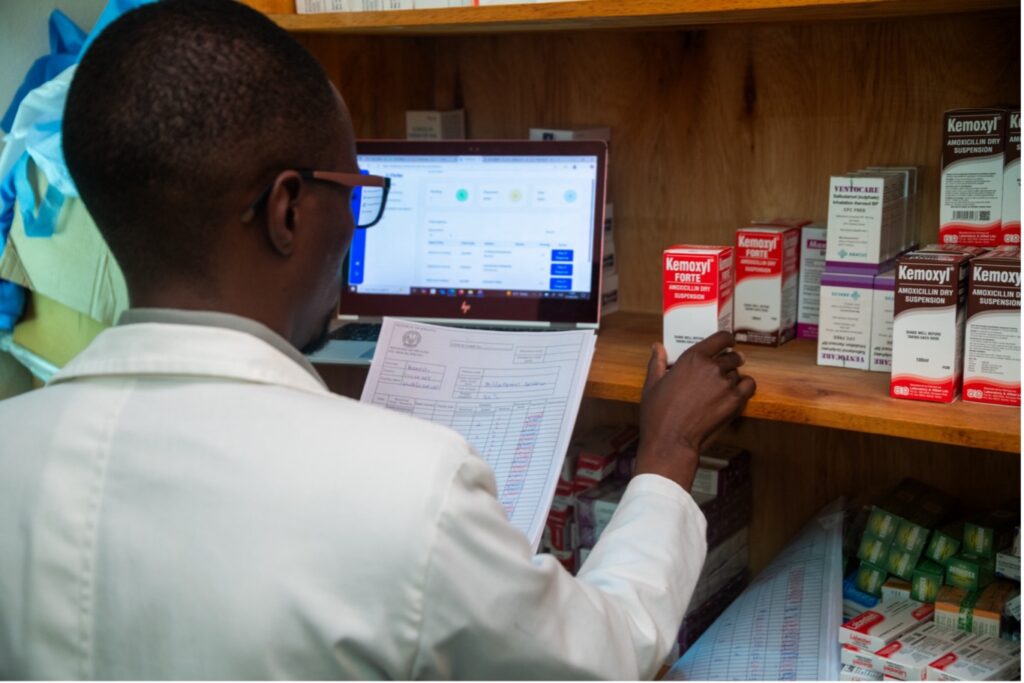
Self-reported results are encouraging, but governments and funders need a clearer view of where AI will matter most.
In Ethiopia, Opian Technologies reports that its AI-powered forecasting platform, ForLab Plus, saved the health ministry roughly $38M in planned procurement spending. With official development assistance for health declining and governments struggling with debt, tools like this could help governments run national supply chains more cost-efficiently, if deployed strategically.
To help identify where AI might have the most impact, Salient consulted global health supply chain executives and identified 7 key supply chain challenges that appear most amenable to AI-driven solutions today. These are: High workforce cost and skill dependency, data management and report automation, fragmented data for decision-making, suboptimal inventory levels, inefficient and manual procurement, inaccurate demand forecasting, and lack of serialization and track-and-trace. Against these 7 problems, Salient rapidly landscaped AI-driven supply chain solutions already in market in heathcare programs across Africa and found at least 20 solutions under deployment.
The self-reported impact of select AI solutions are encouraging. In Kenya, InSupply Health’s SMArT tool cut procurement planning from between 2 to 3 days per facility to under an hour, and the company reports 100% availability of MNCH tracer commodities at participating facilities. In Morocco, Distripha reports a 20% reduction in pharmacy inventory levels, freeing up working capital. Independent evidence is thinner but emerging: a peer-reviewed study in Sierra Leone found that a low-cost decision-support tool increased consumption of allocated medicines by 19%, a proxy for improved access.
Dr. Anne-Maryse Khabore, former Director General of CAMEG, Burkina Faso’s central procurement agency for essential drugs, sees similar promise: “For governments facing increasing fiscal pressure and growing demand for health services, these early experiences suggest that AI could become an important enabler of more efficient, resilient and evidence-informed health supply chains. The pace of AI evolution means the window of opportunity is narrow: government leaders across Africa need to act now to advocate for equitable access to AI infrastructure and ensure that Africa is not left behind.”
These signals suggest the use of AI in African health supply chains may be further along than some assume, but the evidence is early and largely self-reported. Several important questions should guide the next phase of this work:
- Which supply chain challenges are worth tackling with AI first?
- Where do we project AI solutions could have the greatest impact – especially in public-sector supply chains?
- What solutions being developed outside Africa or outside health have outsized promise?
- Where do gaps remain in solution sets that AI might be able to help solve?
As countries take on greater responsibility for financing and managing essential health commodities, governments can play a leading role in assessing which supply chain problems are worth tackling first, and where AI can have the most impact. Once identified, policy can encourage the use of AI to deliver results. Ethiopia offers an instructive example: ForLab Plus reached national scale after the Ethiopian Pharmaceutical Supply Service required health facilities to submit forecasts and procurement commitments through the platform for validation.1 To help enable progress, global health institutions and donors can negotiate affordable access to AI infrastructure, such as API credits and subsidized licensing, and back Africa-based capabilities like local language models and context-specific datasets.
AI shows clear potential to improve health supply chains, and early evidence suggests solutions are already delivering results in specific contexts. Whether that impact holds up under independent scrutiny, or translates into national-scale health outcomes, remains to be seen. Success will be measured by fewer stockouts, better use of public funds, stronger health supply chain institutions, and above all, improved access to essential medicines for the people who depend on them.
Work with us
Interested in discussing these findings in more detail? Download the full report, and contact deji@salientadvisory.com or abdullah@salientadvisory.com